Adventure in Brezova, Part 4

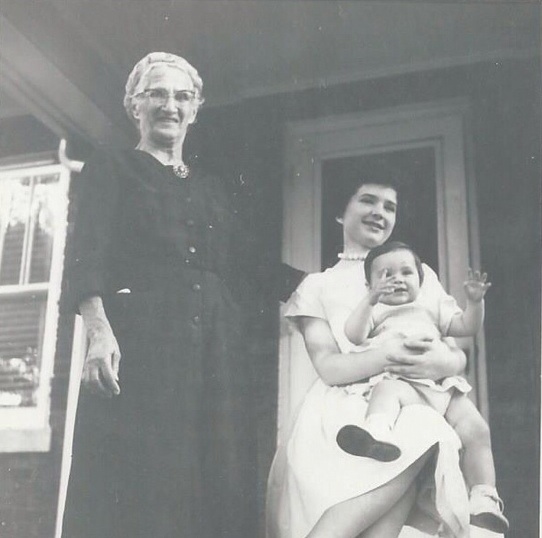
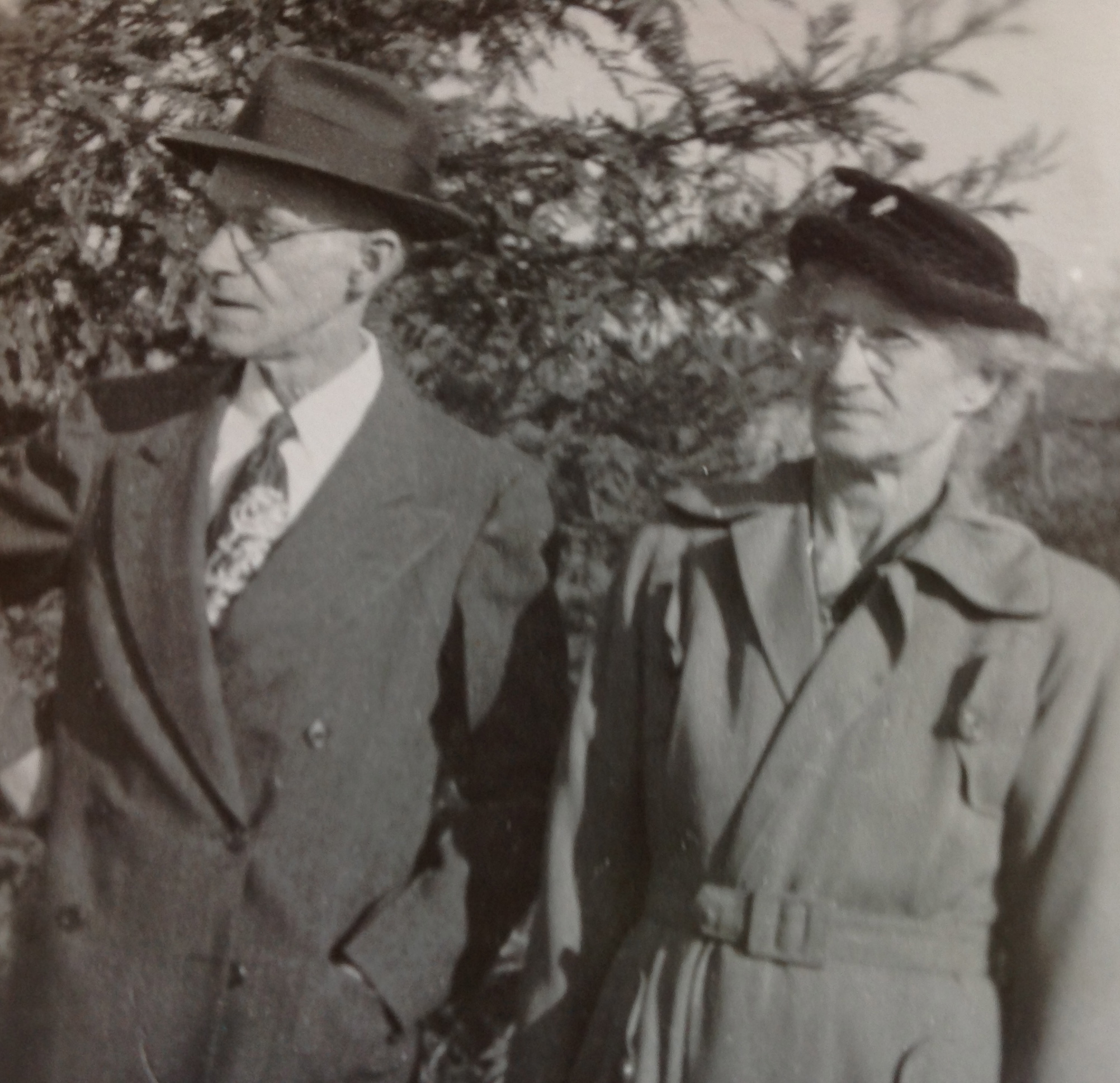
Grandma and Grandpa Schlegel in the mid- 1950s.

Grandma and Grandpa Schlegel in the mid- 1950s.

Two Milk Cows and a Distillery: In Chicago, my grandmother worked as a maid. I had the idea that she grew up poor and uneducated, but now I wonder: did anyone say that, or did I just assume it?

My grandfather, Hilmar Schlegel, was the youngest son of a prominent architect in Cologne, Germany, and my mom often told us about her educated, prosperous relatives in Germany.  My mom grew up in the height of the Great Depression, and her family struggled financially throughout her childhood. I recall a story about a time she stood in line to get a pair of “relief” shoes issued by the government, and the shame she felt.  Four of her older siblings left school before graduating high school so that they could work and help support the family.
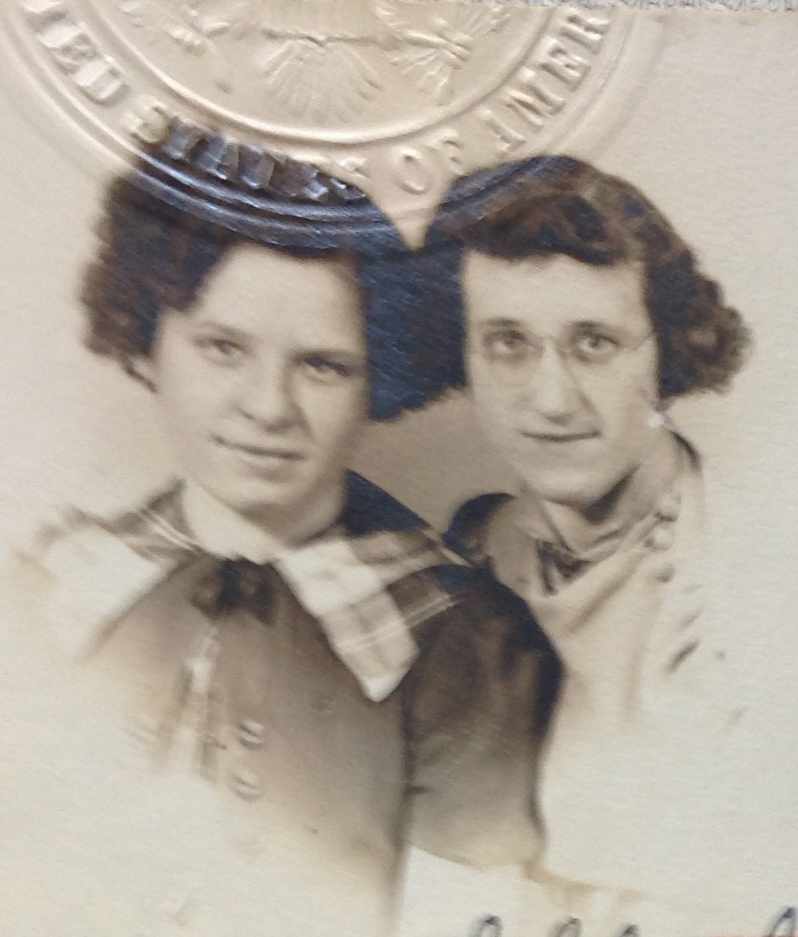
My mom shared a passport and a passport photo with her older sister, Johanna when they travelled to Germany in 1938.

My mom shared a passport and a passport photo with her older sister, Johanna when they travelled to Germany in 1938.

In 1938, when she was 15, my mom traveled with her father and sister to visit his large family in Germany.  This trip was possible only because my grandfather inherited money that could only be spent in Germany.   So my mom, daughter of a hotel maid who had grown up with no luxuries, suddenly found herself dining in the homes of aunts, uncles and cousins who had servants waiting upon them.  Recollecting these stories now, I can discern both pride and shame.

Given the contrast between the life she lived in Chicago, and the relative opulence she witnessed in Germany, it is understandable if mom’s simple narrative of her parents’ story was this: a young German man from a well-off, well-educated urban family came to America and fell in love with a poor, uneducated girl from a small village in Czechoslovakia.  Whether that was the story she actually told us, I no longer know, but it was the story that somehow formed in my mind.  And it was not exactly wrong, just more complicated.

I remember hearing that Grandma’s father was a “traveling teacher” but I had no idea what that meant.  I was surprised when Mr. Galik, the historian of Myjava, answered a question about my Rechtoris great grandfather’s livelihood like this: “At that time, there was a shortage of qualified teachers, and anyone who could read and write could teach.  But, this, I think, was not your great grandfather.  I know the Rechtoris family name and they were intellectuals.  I think your great grandfather was probably a qualified, educated teacher who traveled to teach at Lutheran schools in the rural areas.” Now that I think about it, this is not really surprising, but I had never challenged my assumptions about the family.  My mom often commented on how many languages her mother spoke –six, I believe — and this probably did not arise from a family that had no education.  During our day in Brezova, we gathered other hints that perhaps my grandmother grew up somewhat differently than I had imagined.
IMG_7992

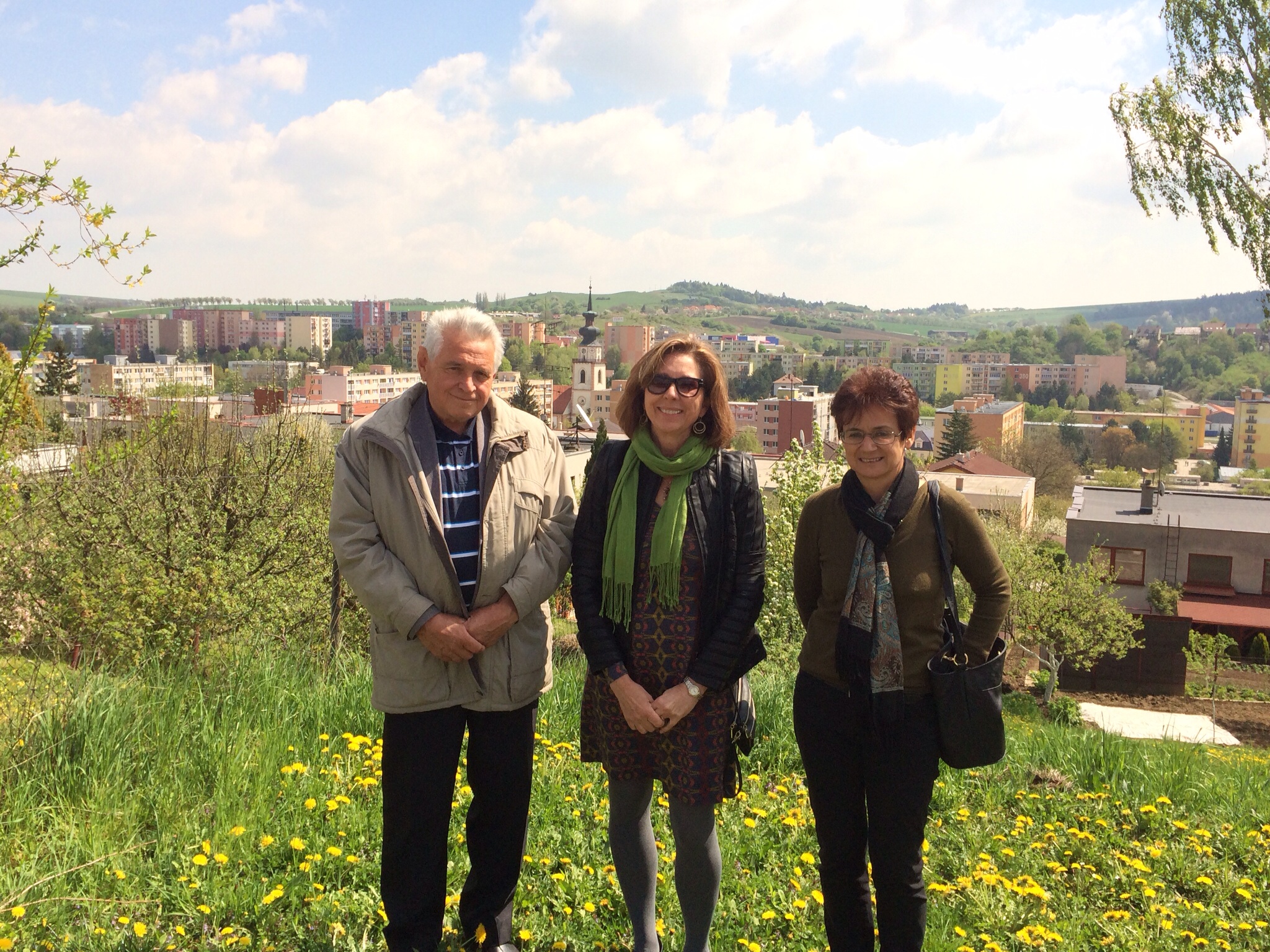
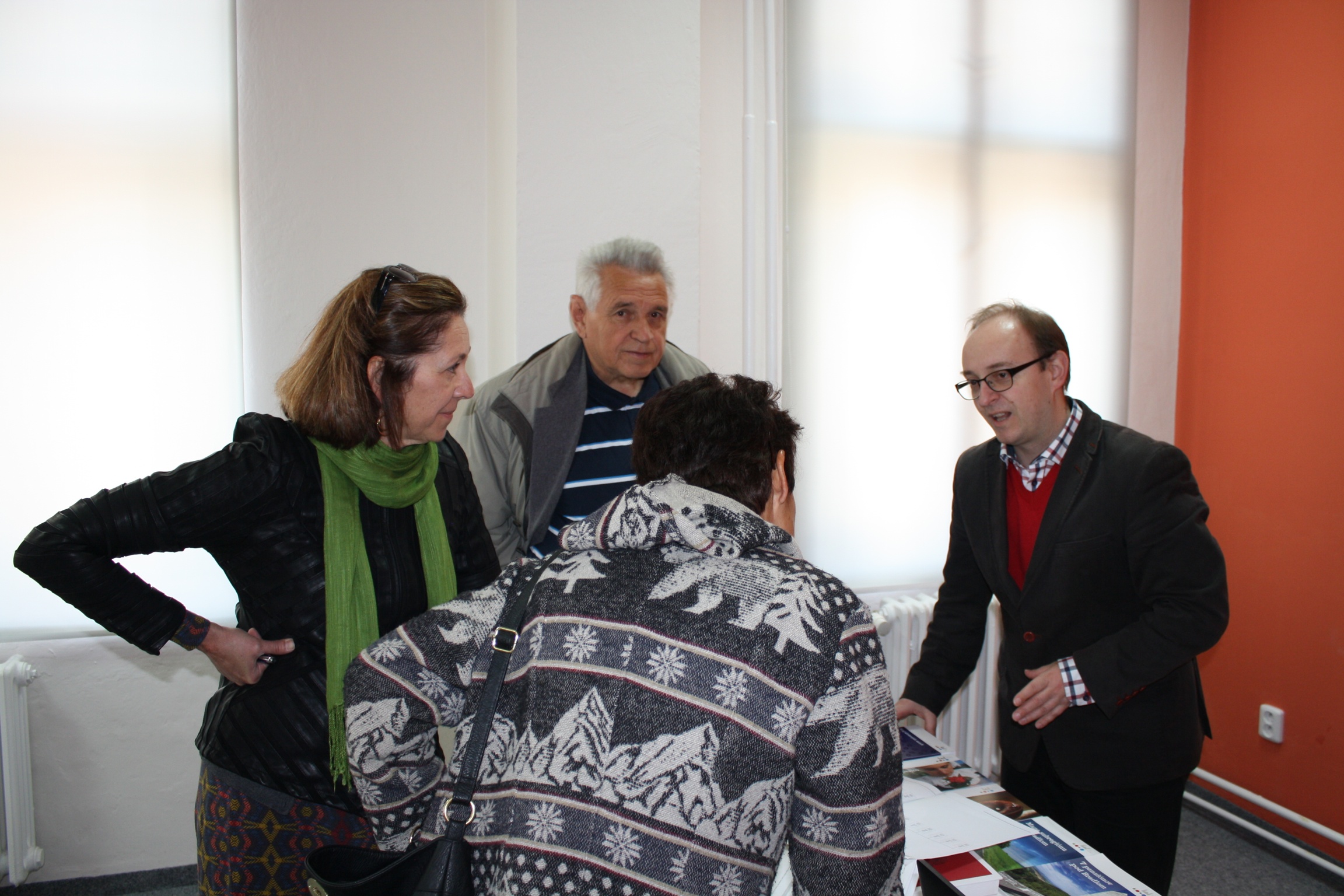
Brezova town historian, Matus Valihora, provided us with information on the vocation of some of my ancestors and the location of my grandmother’s home in Brezova.

After we finished our meeting with Mr. Galik at Hotel Stefanik in Myjava, he accompanied us to Brezova and introduced us there to the town historian in Brezova, Mr. Matus Valihora.   Mr. Valihora, as I understand it, is the curator of a museum devoted to Milan Radislav Stefanik, mentioned in an earlier post, and he has written a book (in Slovak) about the history of Brezova.  Mr. Valihora was quite willing to research information about my ancestors while we explored the town.  I was particularly interested in knowing if we could find the house where my grandmother was born, since we had a record indicating it was “House 297.” When we came back several hours later, we found Mr. Valihora poring over an yellowed, old tax register from the turn of the 19th century.  He explained that he was not able to determine the exact house belonging to my grandmother, but he had found two of my ancestors, both named Jan Michalek, in the tax registery.  He showed us a page in the tax registry and explained how the columns indicated the class standing of the person entered.  Your ancestors, he explained to me, were of the highest class in Brezova.  Another surprise.  But lest you think I am bragging, let me put this in context.  My ancestors did not live in a castle, nor did they even own a farm.  No, this high social standing was determined by the fact that they owned two milk cows, a small field in the hills, and ran a small distillery.  (The region is still famous today for its locally produced plum brandy.)
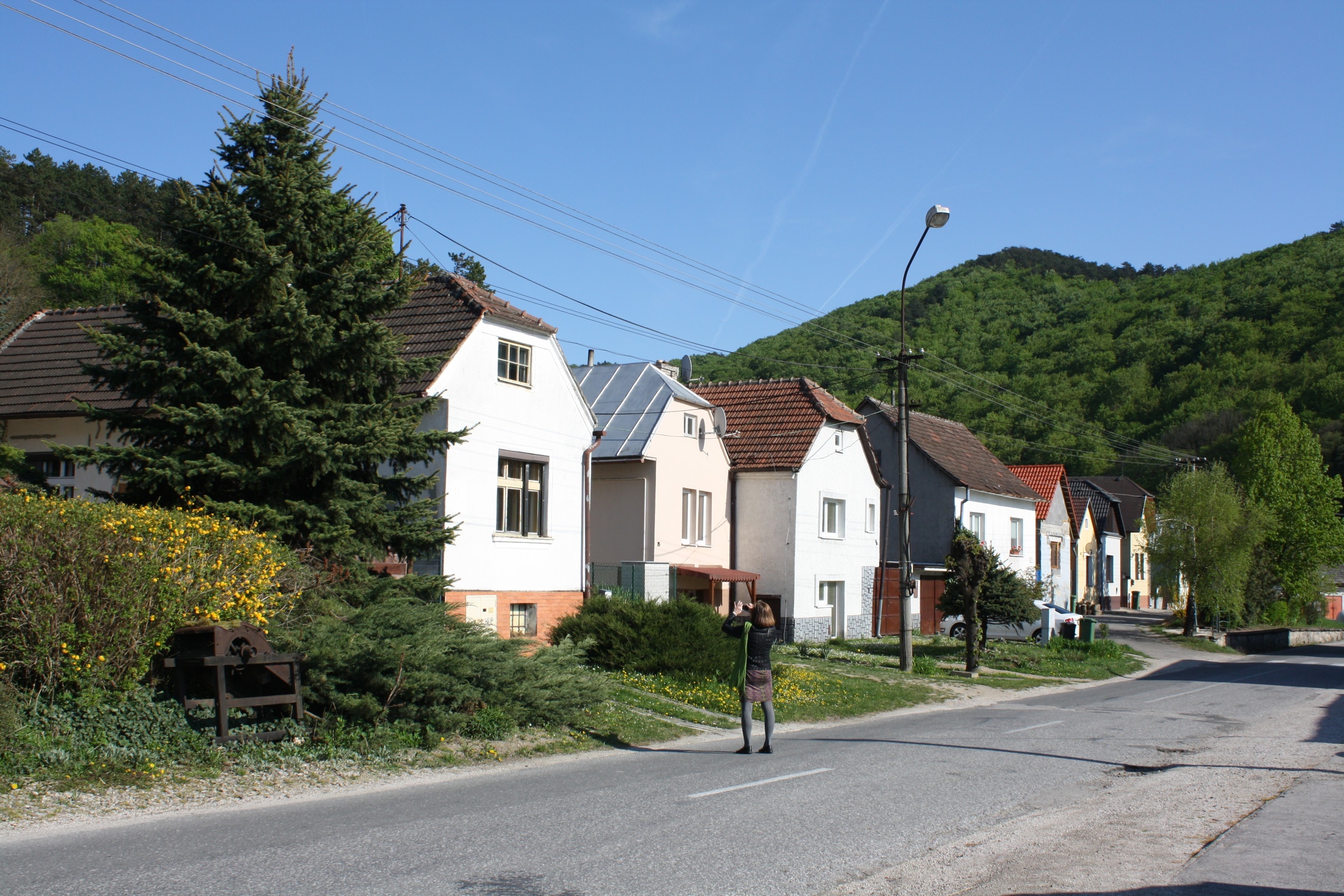
The street my grandmother lived on is one of the few in Brezova with historic buildings.

The street my grandmother lived on is one of the few in Brezova that still contains original buildings.

My idea that Grandma grew up poor was not entirely inaccurate in that no one in this town was rich, no one had a secure economic future, as explained my in my last blog post.  There was a reason that 25% of the town’s residents emigrated to the U.S. in a 10-20 year period.  But it turns out that Grandma’s family was probably relatively better off than most.  It seems likely that she lived in a decent, well-built home on one of the nicer streets in Brezova.  The historian could not tell us her exact house because all the buildings in town have been renumbered, but he was able to determine the street she lived on, and we visited it later in the day.  Mr. Galik had explained earlier that nearly every building in Myjava and Brezova had been rebuilt within the last 50 years because the original homes were built with cheap materials and construction that did not stand the test of time. It turns out that my grandmother and her family lived on one of the only streets in Brezova where the original houses are still standing.  Meaning, I think, that her family had the means to build a sturdy home.  (With further research, it might be possible to determine how today’s numbering system correlates with the old numbers, but certainly not in an afternoon and not without the help of someone who reads Slovak.) The fact that the family was able to send three daughters to the U.S. is also a factor pointing to relative wealth.  They had the means to leave, and many others did not.  I remember the first time, in a graduate school seminar, when I learned that most immigrants to the U.S. do not come from the poorest of the poor families.  I think I always thought that because immigrants are usually poor compared to native born citizens once they arrive, and because they often work in menial jobs, they were poor in the places they left.  That is not necessarily true.  It usually takes money to create opportunity, and immigrants who land on our shores have gathered at least enough  money to gamble on a brighter future.  That, apparently, was the case with my grandmother and her sisters.
IMG_8008

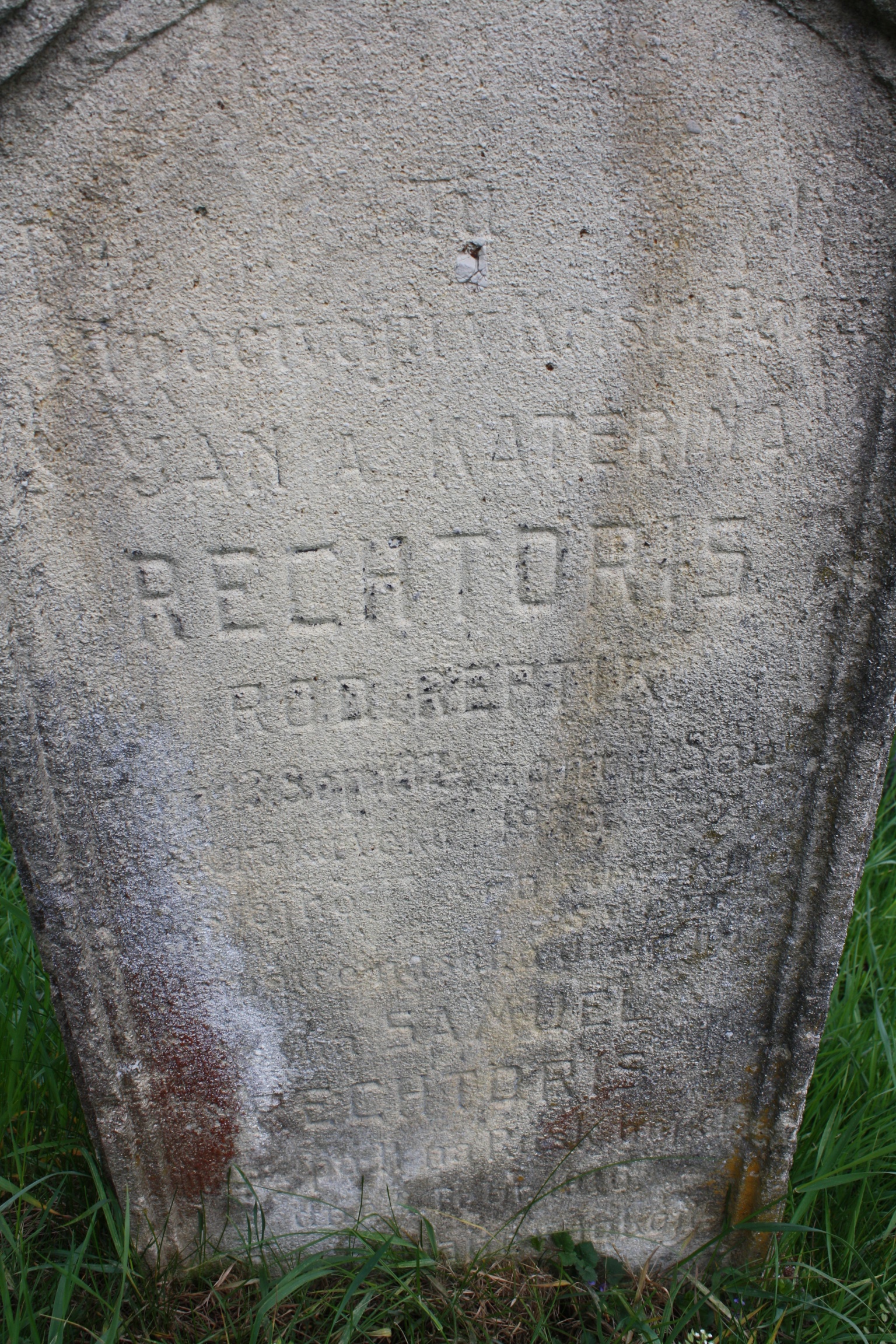
The tombstone of my great- grandparents, Jan Rechtoris and Katarina Reptik, and their son Samuel, who died in 1916.

I often marvel that Grandma arrived at Ellis Island with only $10 to her name, but when I mentioned this to John Palka, he told me that was more than many Slovaks had when they arrived.  Once again, more answers lead to more questions.  I wonder now how it was that my grandparents were able to buy a home in Chicago in the first place, and hold onto it — more than many turn-of-the-century immigrants managed.  In fact, my dad’s parents, not immigrants, lost their home in the economic turmoil of the 1930s.  I also wonder: was my grandmother sending money home to her parents, who did not die until well into the 1920s?  (Another fact I found out from my visit with the Lutheran pastor, and a trip to the local cemetery.) One thing seems obvious:  Grandma’s decision to leave made life easier for her children, grandchildren and great-grandchildren, who are all thriving in the U.S.  — at least if by easier we mean more political freedom, more economic security and better educational opportunities.  I am pretty sure she would be pleased at how her descendants have fared in the United States.  I am grateful for the good life I have been able to live because of my grandmother’s sacrifices.   But I also wonder if the assumption that we are living a “better” life may be more complicated than it seems; I am curious how life unfolded for her contemporaries and for their descendants who stayed in Brezova?,  Perhaps exploring that is my next project.
IMG_7990

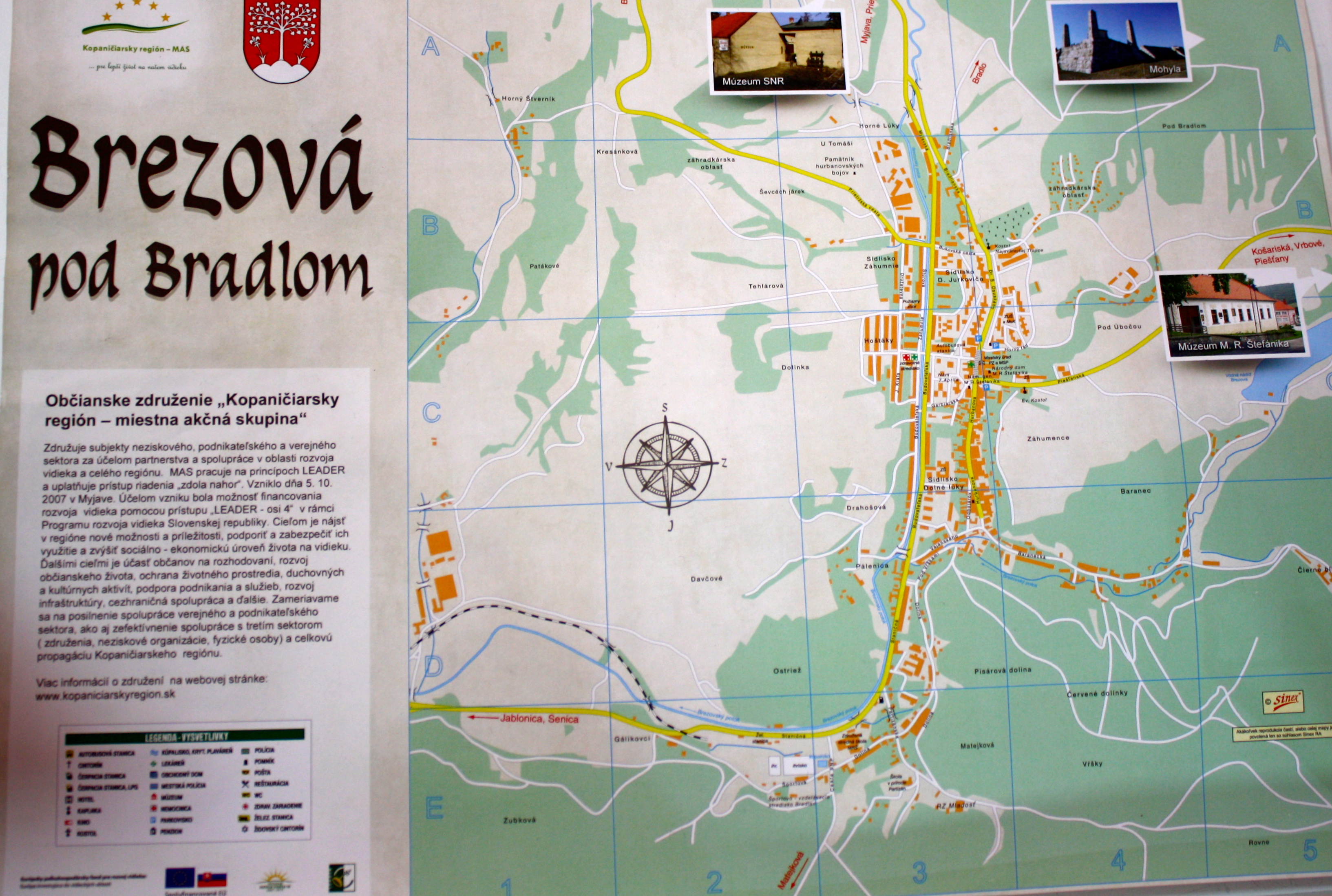
Grandma lived on the street called Baranecka, in the southeast corner of Brezova, D4 on the map grid.

Brezova is breathtakingly beautiful, and when I stood on the street where she grew up, in the shadow of hills that remind me of a California landscape, I wondered what pining she felt for home once she arrived in a noisy, booming, flat city where hardly anyone spoke her language.   Whatever it meant for my future, it could not have been easy for her. In my next post, I will share reflections on what my adventure and its discoveries mean to me.

Adventure in Brezova, Part 3

A Day of Surprises

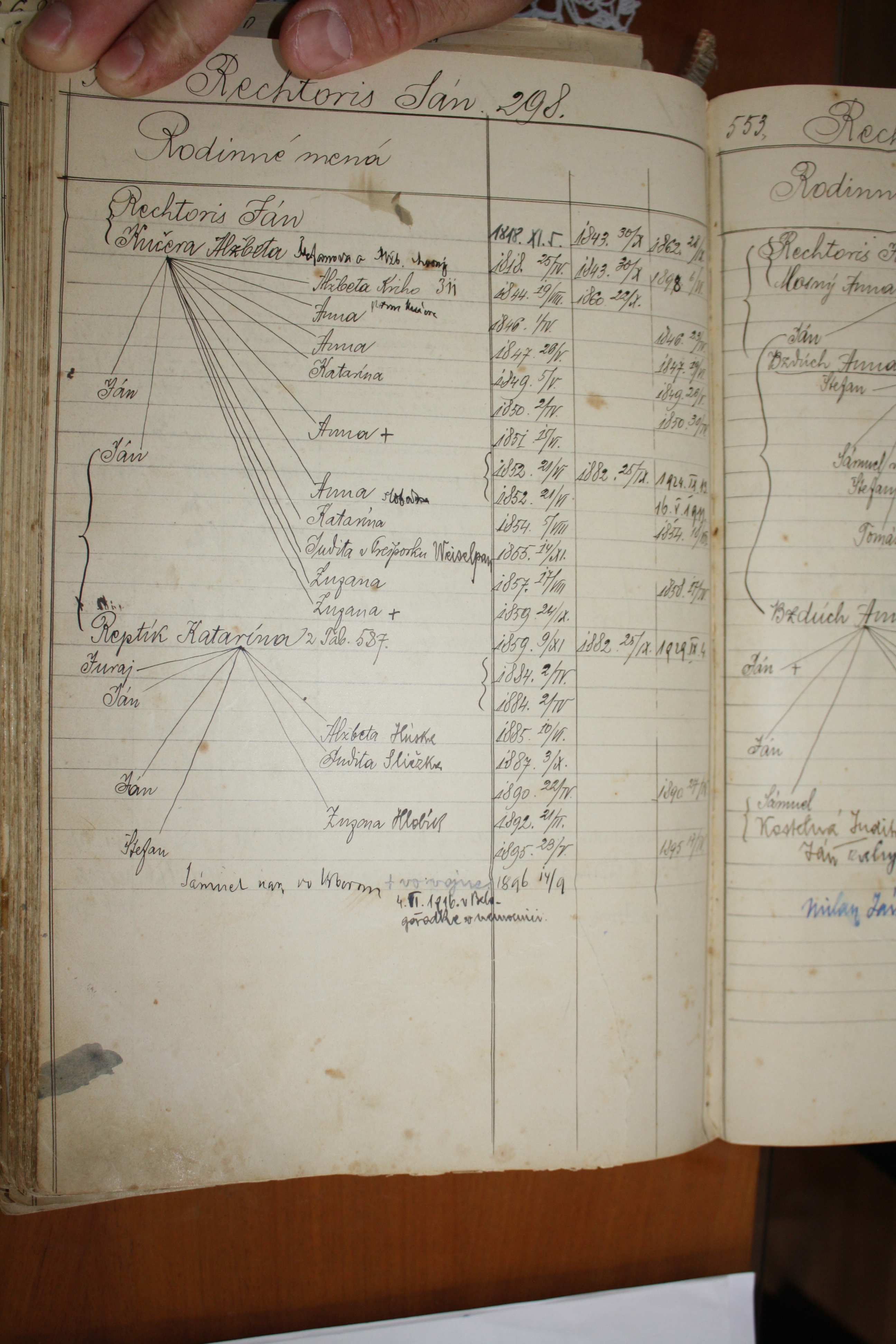
Once upon a time, a Lutheran pastor purchased a big leather book, and in that book began recording births, marriages and deaths of the people of Brezova pod Bradlom.  The first entries in this book were recorded sometime after the Catholic clergy took over the Lutheran church building in 1729 and destroyed all earlier baptismal records.  For 50 years the Lutherans met secretly in remote hillside settlements until the church was officially re-established in 1783.  In 1843 a new page was turned in the big leather book, and the record of the family of my great-great grandparents, Jan and Alzbeta Rechtoris, was started.   On that page, in that book, is entered the name of my grandmother, Judita, born on October 3, 1887.

The Lutheran pastor and our translator, Lubica, pore over the old church records.

The Lutheran pastor and our translator, Lubica, pore over the old church records.

On April 29, 2015 I sat in the office of the Evangelical Church of the Ausburg Confession in Brezova pod Bradlom, perhaps in the very room where a pastor recorded the name of my newborn grandmother in 1887.  Rick and I watched with nervous anticipation as the current pastor turned pages looking for our family’s entry.  Just as he seemed about to say “No, it is not here, I cannot find it,” suddenly an “Ahhh” and fingers pointing to an entry.  It was a thrilling moment in an exciting day, a day that contained more than one surprise.

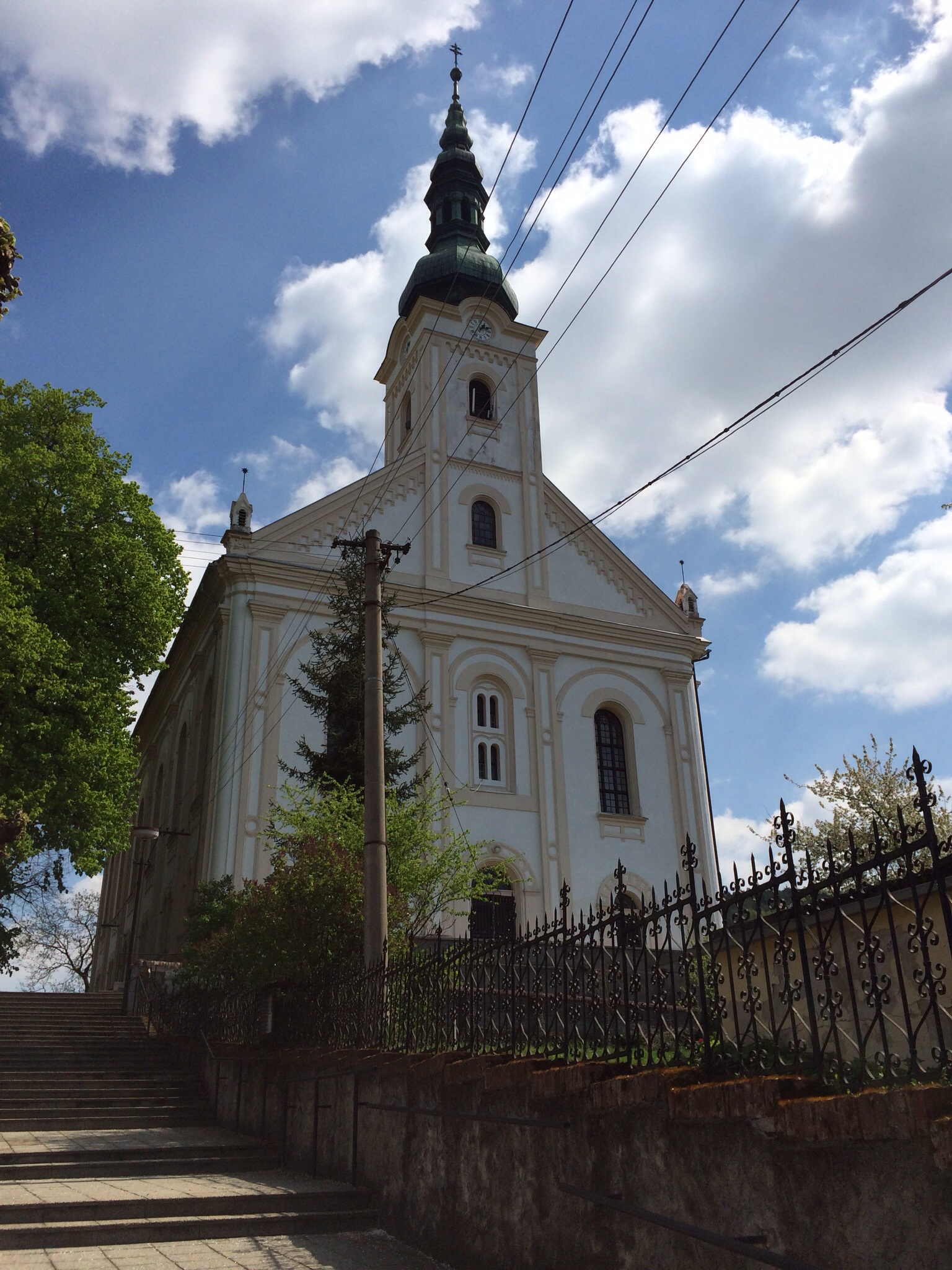
The current building of the Lutheran Church in Brezova pod Bradlom was built in 1873, only 14 years before my grandmother was born. The impressive building with its beautiful, neo-classical sanctuary was financed by local residents, which probably included some of my ancestors.

The current building of the Lutheran Church in Brezova pod Bradlom was built in 1873, only 14 years before my grandmother was born. The impressive building with its beautiful, neo-classical sanctuary was financed by local residents, which probably included some of my ancestors.

Brezova was a town of about 6,000 when my grandmother was born, and the Lutheran Church there had about 5,000 members, a size that today would be considered a mega church in any large city or suburb in the U.S.  Around the time of my grandmother’s birth, it was the largest Lutheran Church in what is today Slovakia.

I don’t know how news of births, marriages and deaths spread or were accounted for, but standing before the church door, breathing the fresh, spring air of Brezova, it  was easy for me to imagine a joyful young father standing on the very spot , knocking on that very door on a crisp fall day 128 years ago to announce: “Reverend, I have a new daughter.  Her name is Judita.”

But perhaps the pastor was not greeted with joy, rather, appeals for fervent prayer.  Before Judita and her older sister Alzbeta were born, my great-grandparents — Jan and Katerina — had twin boys, Jan and Juraj.  Juraj lived 11 days and Jan lived 2 months, 3 weeks and 2 days.  My great-grandfather himself was a twin — one of 12 children born to my great-great grandparents. Only four of these children lived to adulthood, and each of the five babies that preceded his birth lived for no more than a few months.  Infant survival could not have been taken for granted by that father in that time.

An Archive of Mystery

We will never know the emotions that prevailed that day, or the prayers that were lifted to God.  At some point, later that day or week or month, the pastor dipped his pen in ink and entered the name Judita just under the name Alzbeta in the big book.  A few years later, the name Jan would once again be entered, but this Jan lived for only five days.  Then, in 1892, Zuzana — who lived long enough to register in my childhood memories, a tiny little lady with white hair and a beaming smile. After Zuzana, Stefan, who survived only three weeks.  We discovered the existence of Stefan 10 years ago when my sister uncovered his name while conducting geneological research.  No death date was listed for Stefan in the records Jeanne found, and so until I made this trip, we wondered if it were possible we had not-too-distant cousins in Brezova.  Viewing the church register solved that mystery.

But wait, there is more.  A last child, Samuel, born September 14, 1896, died February 4, 1916.  19 years old at the time of death, the age of my youngest son.  The only son.  The only child who still lived in Brezova.   I can’t imagine, don’t want to imagine.

This was a surprise.  No one in the family, that I know of, ever heard that Grandma had a brother.  He died during World War I, almost certainly fighting against the Germans as part of the movement to create an independent Czechoslovakia.  (Remember, Brezova was part of the Austro-Hungarian  Empire, so this would have made him a rebel fighter.)  Milan Radislav Stefanik, perhaps the biggest hero in modern Slovak history, was born in the shadow of Brezova. His tombstone and a huge monument to him towers above the town of Brezova.  During World War I, Stefanik organized and recruited soliders, and even traveled to Chicago to appeal to Slovak citizens there to come home to fight and/or contribute money to the cause.   Samuel Rechtoris died in a hospital in Ukraine, which makes it likely he was connected with Stefanik’s Czecho-Slovak voluntary troops which allied with Russia, France and Great Britain against Germany and Austria-Hungary during World War I.

Why didn’t my grandmother ever mention her brother?  Her sister Alzbeta had a son in Chicago, and he was named Sam.    He was about the age of my mother, and I remember him.  Was he named after this brother?  Maybe.  We may never know.  It is tempting to speculate why this information was never shared, but if I try to do so I am afraid I will very quickly be over my head in the realms of psychology, history and political science.

Records of the children of Jan and Katarina Rechtoris, the parents of my grandmother.

Records of the children of Jan and Katarina Rechtoris, the parents of my grandmother.

Finding out about this brother, Samuel, was a surprise, but not the only  surprise of the day.  I am quite certain that my grandmother could not have conceived a world in which her descendants could type her name on a keyboard and within minutes know all kinds of information she never intended to share.  She probably never imagined her granddaughter – especially me, the youngest when she died — sitting in that church office in 2015, reading that church register.  I hope she wouldn’t mind our snooping because it is motivated only by a desire to understand where we  came from and how we came to be the people we are.  I like to think she would understand and forgive our curiosity.  Because there was, apparently, a secret to hide.

Next to each of Rechtoris daughters’ names in the big leather book was a surname.  Next to Alzbeta, known to us as Aunt Lizzy, was the name Huska, which I know to be the name of her husband.  Next to Zuzana, known to us as Aunt Susie, was the name Hlobuk, and next to Judita was a name that was not Schlegel!  Was Grandma married before she left?  It seems unlikely given that she is listed as Rechtoris on the ship’s manifest and given that she was only 18 when she arrived at Ellis Island.  The Lutheran pastor explained that the name in the book, Sliazka, could have indicated engagement, not necessarily marriage.  So, more mystery.

It is hard to understand why she did not tell her children about her brother Samuel, easier to imagine why this information may have been concealed.  Was it a broken engagement, did a beloved die?  Was he supposed to follow her to the U.S., and never found the means to go?  Was she running away from an unwelcome match arranged by her parents?  Or escaping an abusive relationship?  My friend, Michele, also of Slovak descent, found in her own genealogical research instances of divorce in Slovakia at this time — and her relatives lived in a more remote village than mine.

I don’t need answers.  In fact, this mystery unveiled truth for me.  Wondering what happened helps me to see my grandmother as a young, vulnerable woman making perhaps the most difficult, wrenching decision of her life — not the strong matriarch memorialized by her children, not the strudel-making granny mythologized by us, her grandchildren.  The unexpected finding in the church archives took me from the end of the story to the beginning, and that is an interesting place to be.

In my next post, I will write about my discoveries about how my ancestors earned their living, and how they lived.

Adventure in Brezova pod Bradlom, Part 2

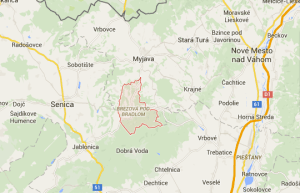
Screen Shot 2015-05-09 at 4.52.02 AM

Map of Brezova. Click to zoom in or out.

Why did my grandmother leave Brezova pod Bradlom?

The story begins in 900 AD.  Really?  900 AD?  Well, that is where the local historian of the Myjava Region began when I posed the question to him.

“Please, I would like to give an overview of this region and then we will get to your questions about your grandmother,” the translator relayed to us.   When the historian began with “Around 900 AD . . .” , I could tell that our translator was a bit concerned about how we would get through 1000 years of history in 30 minutes!

Local historian Jan Galik and our translator, Mrs. Ondrasikova Lubica of Luka Tours,  s.r.o., with me above the town of Myjava.

Local historian Jan Galik and our translator, Mrs. Lubica Ondrasikova  of Luka Tours, s.r.o., with me above the town of Myjava.

Because very few people in the Myjava region speak English -which was forbidden during the Communist era – it was necessary for us to have an interpreter for the day.  The hotel helped us find an English-speaking tour guide who drove us to Brezova from Bratislava and who also served as our translator.  She was warm and wonderful, and quite got into the spirit of the exploration.

Way Leads on to Way

Before I go on, I should explain how it came about that Rick and I found ourselves in a meeting with Mr. Jan Galik, a Slovak-speaking regional historian at the Hotel Stefanik in Myjava, Slovakia, hearing a sweeping history of the land of my Rechtoris ancestors.

One of the things I did to prepare for our trip was look for some background materials on the history of Slovakia.  The Schlegel grandchildren all grew up hearing that our grandmother came from Czechoslovakia, not too far from Vienna and the Austrian border.  I had a vague understanding that she lived in an area of changing borders (which it turns out was not quite accurate), and thus could speak multiple languages.  But we knew very little beyond this, and only discovered the name of her hometown a few years ago.

https://i0.wp.com/ecx.images-amazon.com/images/I/51crUVLYLsL._SY344_BO1%2C204%2C203%2C200_.jpgAbout a month before our trip, I found a book called “My Slovakia, My Family” by John Palka, grandson of Milan Hodza,  prime minister of Czechoslovakia during the turbulent years leading up to World War II.  Mr. Palka’s book, published in 2012, is part memoir, part family history and part historical account of the Slovak people and the region of Central Europe that is modern day Slovakia.  I have always most enjoyed learning history by hearing a story, and Mr. Palka’s is quite riveting.  His family was exiled not once, but twice, from his homeland, and the first time was only a few weeks before his birth in 1939.

World Wars Become Personal

In all of my formal education about World War I and II, as well as what I have learned as an adult from reading, visiting museums and trying to understand current events, the politics of 20th century Europe had never been as clear to me as it was after reading Mr. Palka’s book.  We often hear about how Neville Chamberlain appeased Hitler, for example, but I did not know (or perhaps did not comprehend) that the appeasement was a yielding of the Czechoslovakian border, a border not all that far from my grandmother’s hometown, and that was the beginning of World War II — a war in which my father and all five of Grandma Schlegel’s sons served.

When I finished the book, I did something I have never done before:  I wrote an email to the author.  I told him a very brief bit of my grandmother’s story, and thanked him for writing a book that helped me to understand the context of her decision to emigrate.  Rick often quotes a line from Robert Frost’s The Road Not Taken: “way leads on to way” which turns out to be a quite apt description of how our adventure in Brezova began.

Mr. Palka answered immediately and warmly, and to my surprise, asked if I would be interested in meeting with Mr. Galik, who had been a resource on the Myjava region when he wrote his book. Rather awed at this possibility, I said, “Yes!” and our journey began.

Mr. Galik’s Sweeping Overview

So, yes, the story begins in 900 AD, which was close to the beginning of the Great Moravian  Empire.  Slavs first came to this region from Ukraine in the 5th century, and even earlier than that German tribes had settled in the area, but they didn’t stay permanently,  The Danube was the border between Germanic tribes and Romans.   A Roman inscription from the year 179 AD has been found in the area.

This Myjava region was part of the Great Moravian Empire from the mid 9th century to the early 10th century.  The area of today’s Czech Republic and Slovakia are settled by three ethnically-related groups — the Bohemians, the Moravians and the Slovaks.  In the middle of the 9th century Moravian Kings ruled the country .  This was a very large empire that extended over today’s Bohemia (Czech Republic), Slovakia, southern Poland and western Hungary.  It was a very important empire in the 9th century, and when it ended, it was the last time the people of this region would have self-rule for many centuries.  And this is the beginning of the story that eventually caused many people to leave in search of an easier live, and why Mr. Galik began our family’s story with a history from so long ago.

As I listened, I began to understand that the story of Brezova and the Myjava region is a story of a people struggling for their religious and cultural identity, and their livelihood.  Identity and economics were deeply connected, and the long history of hardship offers some hints as to why my grandmother left, and possibly why she never shared more of her background. Life was hard for centuries, both economically and politically, and I gather from what our driver told us, it still is.

(A bit of a disclaimer: The section below contains quite a bit of detailed history that is based on our notes from a translated oral history, so I want to be clear that errors or misunderstanding of the facts we heard are possible.  I am sharing the story as I experienced it from listening to Mr. Galik on April 29, 2015.  For those who are interested in reading official historical accounts, there are some written sources that my sister Jeanne found that we can share, and also there is some information available by googling Brezova pod Bradlom)

The Great Moravian Empire was conquered by the Hungarian kingdom, who ruled off and on until the end of World War I. (The actual history is much more complicated than that, of course, but for the purposes of our story, it suffices!) In the 13th Century, invaders from Turkey arrived in Hungary, which caused a wave of immigration north to the area of Myjava and Brezova.  Only large stone fortresses could stop the Turkish invaders, so ten fortresses were built between the border of the Hungarian  and Czech kingdom, including two in the Myjavan region.  The construction of these castles was followed by a movement of people to the area.

The Ottoman Empire (Turkey) invaded Hungary again in mid 16th century, and this time the invasion was stronger and more successful and caused more people to flee from the south to the mountains around Brezova.  This caused the founding of Brezova in 1555 and Myjava in 1558.  This was a time of serfdom, so people needed permission of lords to move there.  As the region grew in population, people built small settlements called Kopanista’s that consisted of 5-6 houses – something less than a village.  Mr. Galik and our driver took us to the hills above Brezova and pointed out clusters of homes scattered around Brezova that are the modern day remnants of these Kopanistas.  (These small settlements become part of our family story later . . .)

The Lutheran Church in Brezova where my grandmother was baptized.  At the time this building was built, around 1870, it was the largest Lutheran church in Slovakia.

The Lutheran Church in Brezova where my grandmother was baptized. At the time this building was built, around 1870, it was the largest Lutheran church in Slovakia.

During the16th century there was another wave of immigration wave from north of Slovakia.  The immigrants from the south had been farmers; these new immigrants from the north were shepherds from the mountains.  To protect themselves, these shepherds used guns.  They were a more militant people, and that becomes an important part of the story of this region.  All who settled in the region were Lutherans, though Slovakia was a largely a Catholic nation under the rule of the Hapsburg Monarchy, who were staunch Catholics.  The Lutheran identity is important in the history of Brezova, as it resulted in centuries of economic deprivation, which probably had at least an indirect effect on the later wave of immigration that included my grandmother.

Life was not easy for Lutherans in this region.  Over the centuries they fought for religious freedom and later for their Slovak cultural identity.  In the 17th century under the rule of the Habsburg Monarchy, there was re-Catholicization in the Austro-Hungarian Empire ( a reversal of the Reformation).  Lutherans in the Brezova region were tough with weapons and they protected their right to practice their religion.  But this part of country remained undeveloped compared with rest of country because it was a Lutheran region and unsupported by the Catholic Hapsburg Monarchy.  Uprisings against the Habsburgs started in this region in the 17th century.  The uprising was started by aristocrats and joined by citizens.  The Habsburgs put down the the uprising and  punished  this region for participating.

In 1781 Maria Teresa (the Hapsburg queen) was replaced by her son Joseph II, who was influenced by the French Revolution, and gave equal rights to Catholics and Lutherans, and greater rights to Jews.  So development finally started in this region at this time, but it was hard to overcome 200 years of no development.

Struggle for language identity

Joseph II wanted one official language in the region: German.  But the Hungarian nobility was against this, since they were multicultural with Latin as  the common language until  late 18th century.  The Hungarians pressured this region to have only the Hungarian language.  (Struggle over language was a repeated theme in this area persisting to the time of my grandmother’s childhood, when the Slovak language was not allowed and people were made to speak Hungarian.  I heard references to her multilinguism growing up, but I misunderstood it to be about changing borders.  It was not that borders where changing (yet), but that the Hungarians sought for their language and culture to be dominant.  Some sources I read say their goal was to wipe out the language and culture of the Moravians, Bohemians and the Slovaks.)

In 1848 a revolution against the Habsburg Empire came from many European nations.  It was a time of great turmoil all over Europe.  The center of the uprising in this part of the Hapsburg empire was Myjava, and it was led by Lutheran pastors.  The uprising was suppressed, which caused more poverty, as trade crafts fell.  This is the time when emigration to US first started.  The Myjavan region, including  Brezova, was a center of rebellion and movement for democratic rule.  The local people suffered for this, as the region was often ignored as a punishment by those in power.  Mr. Galik did not mention this, but another source I read suggested that a “heavy atmosphere” pervaded in Brezova for 70 years — from this time of uprising until the country of Czechoslovakia was formed in 1918. My grandmother was born in 1887, and left for America in 1905.

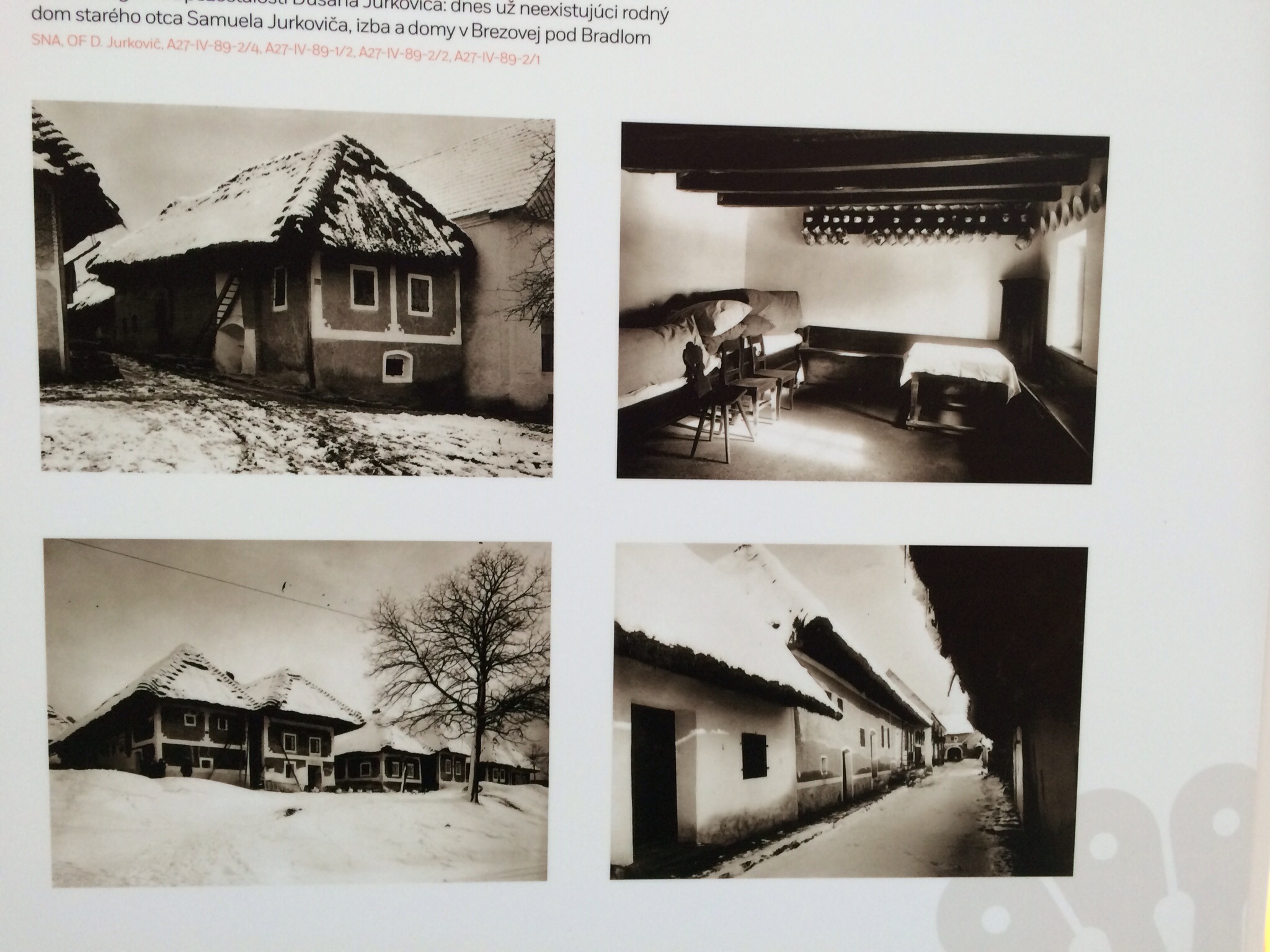
Typical homes of Brezova around the turn of the century.  Very few of these historic homes still exist.

Typical homes of Brezova around the turn of the century. Very few of these historic homes still exist.

Emigrants  from the Myjava region went mostly to the eastern part of US.  Little Falls, NY, is known as Little Myjava.  My grandmother and her sisters went to Chicago.  I do not know why they ended up in Chicago, rather than New York.  Perhaps my siblings or cousins know more about that.  The number of citizens who left Brezova and the Majava region around the time my grandmother did was staggering: about 25% of the population between 1893 and 1908.  Mr. Galik explained that nearly every household in the region today has relatives in the US.

At this point, Mr. Galik said, “And now we get to the reason your grandmother left.  There was no industry at that time.  Agriculture could feed only a certain number of people.  There were no jobs, no work.”  This is not really a surprise; many immigrants to the US came for economic opportunity, or as we like to say “to build a better life.”  I suppose we all assumed this was the reason Grandma left.  Yet, standing in the midst of the mountains she woke up to every morning, made it harder to take the momentous decision to leave for granted.

In the last seven years we have sent three 18-year-old sons off to college.  Each time, I fought off tears knowing that for our sons it was a new beginning and would open doors of opportunity for them, even as it was closing a chapter for us.  Each time, we knew we would see them in 10 weeks.  My great grandparents said good-bye to three daughters and never saw them again.  My 18-year-old grandmother had probably rarely, if ever, been more than a few miles from Brezova, yet off she went to the city of Chicago on the other side of the world.  I can’t imagine.

In the next post, I will tell the adventure of my visit to the town, and share some of information about my ancestors I discovered from the town historian and the Lutheran pastor.

A Bit about Historian Jan Galik

Mr. Galik is a lifelong Myjava resident who has devoted his retirement to writing about the history of the region.  He is probably about 70 years old.  He told us that he spent his career overseeing the re-building of the the town of Myjava, and was responsible for most of the modern buildings and homes there.  His uncle was a professor and began the historical work that he is now finishing.  He has published two books on the region, but they are only available in Slovak, unfortunately!

Adventure in Brezova pod Bradlom

Brezova pod Bradlom from the M.R. Stefanik Memorial

Brezova pod Bradlom from the M.R. Stefanik Memorial, May 2015

In the summer of 1905, my 18-year-old grandmother, Judita Rechtorisova*, left  Brezova pod Bradlom, a small town in the shadow of the Carpathian Mountains in present-day Slovakia, for the U.S.  She left in the middle of a wave of 1,500 citizens from her small town, population 6,000, who emigrated between 1893 and 1908.

Judita, or Julia as we knew her, never saw her parents again.  By the time she had the money and time to return, in 1957, Brezova had been rebuilt and was quite a different place than the old-world village she left more than 50 years earlier.

Judita (Julia) Rechtorisova Schlegel, circa 1961

Judita (Julia) Rechtorisova Schlegel, circa 1961

Grandma Schlegel did not have an easy life in Chicago.  She married my grandfather, Hilmar  Schlegel, a German immigrant, and together they had 7 children.  My mom, Ruth, born in 1923, was the youngest.  During the height of the Great Depression Grandpa developed epilepsy and couldn’t work, leaving Grandma to support the large family.

With the help of my hardworking aunt and uncles, the family survived and even managed to own a home with a large vegetable garden that helped feed the growing brood.

Grandma died when I was only about 2 years old, so sadly I did not get to know her or taste her legendary Apple Strudel.  I grew up hearing about her deep religious faith, and her devotion to helping neighbors in need.  This extended to Grandpa’s formerly prosperous German family, who suffered greatly during the war and she managed to send medicine and supplies that apparently kept them afloat.

Our family knew very little about Grandma Schlegel’s past until my sister, Jeanne, discovered the name of her birth town about 10 years ago while doing some genealogical research.  Jeanne had the fortune to visit Brezova  at that time and reported her surprise at the loveliness of the spot Grandma left.  My imagination was captured by the thought of our grandmother leaving this verdant spot for what turned out to be a not-so-easy life in a big city a world away.  Why did she leave, and why didn’t she tell her children more about the place she came from?

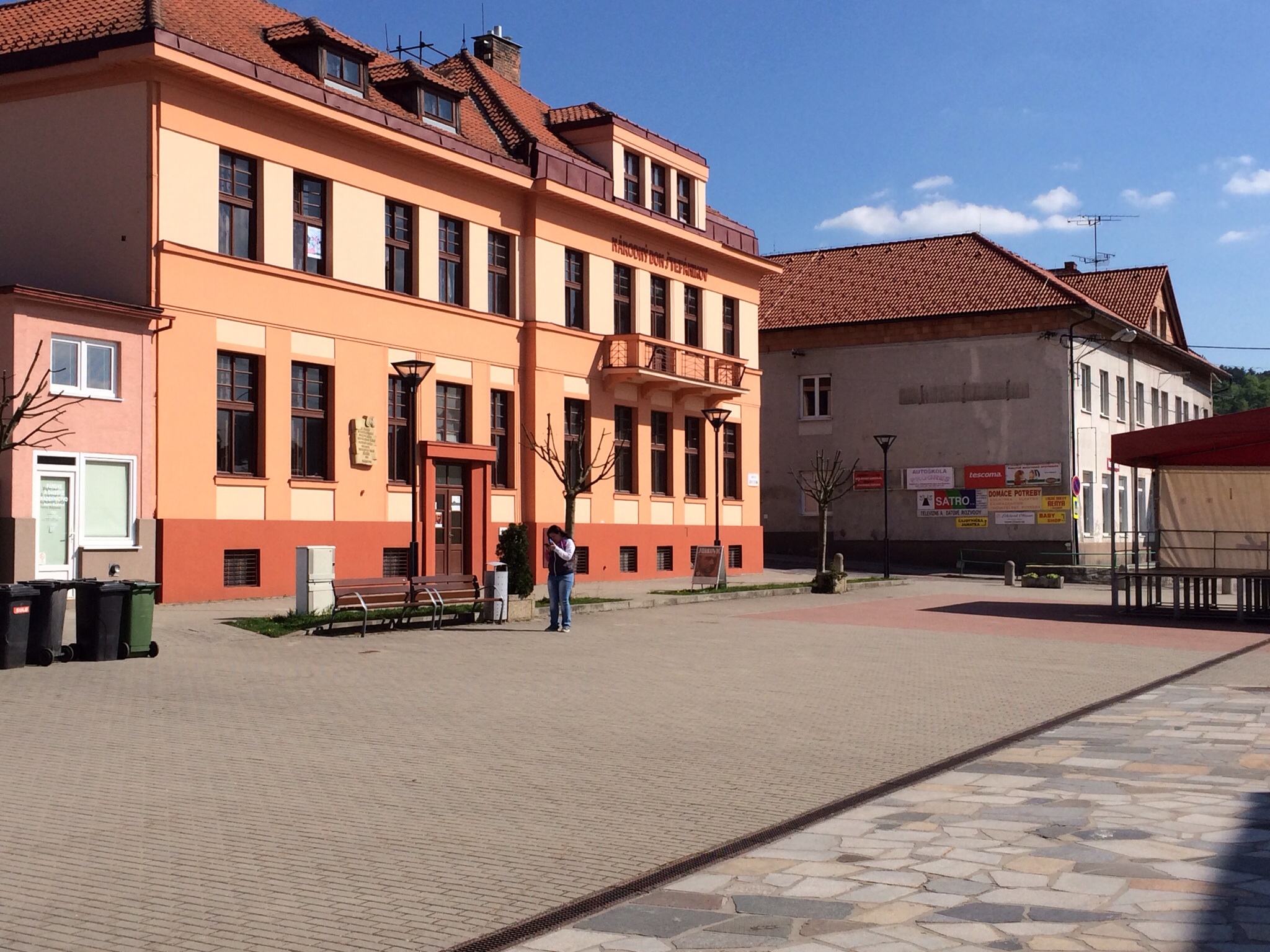
Town square, Brezova pod Bradlom, May 2015

Town square, Brezova pod Bradlom, May 2015

I found some answers a few days ago, and I will tell the story in  a few installments.  In my next post, I will tell some of the history of the Myjava Region, where Brezova pod Bradlom is located, and tell a little more of my grandmother’s story.

*One of the things I learned during my visit is that the ending -ova is typically added to the surname of a woman, thus my grandmother would have been known locally as Judita Rechtorisova.

Spring in Budapest

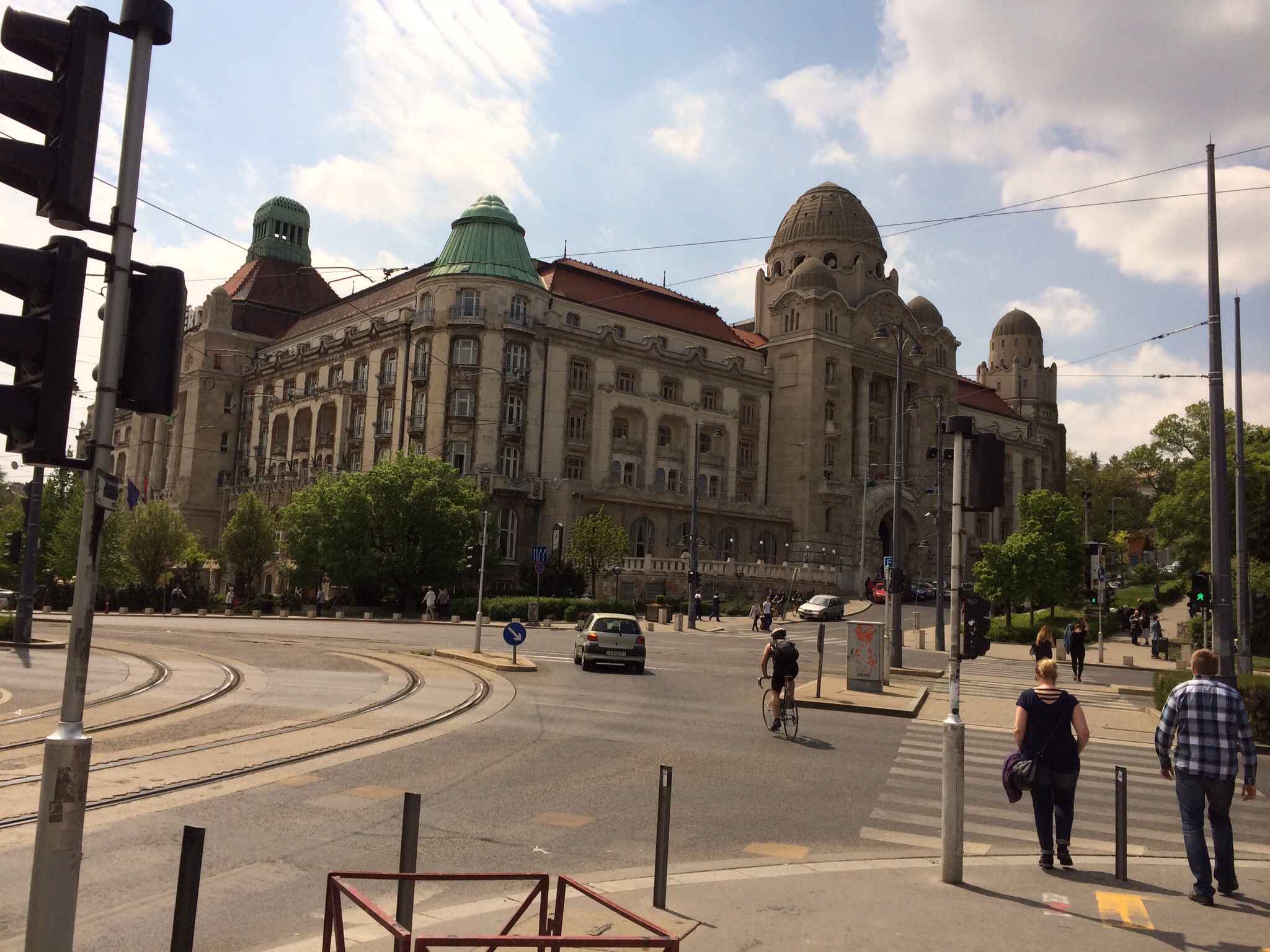
Hotel Gellert, Budapest

Hotel Gellert, Budapest

In 1968 a 19-year-old woman in Hungary studied drawing and dreamed of becoming an artist someday.  She left on a short trip to visit her husband, who had managed to get to Austria to audition for a Western orchestra.    When she arrived, he told her, “I can’t go back; you can stay here with me, or you can go back home to your parents.”  She wrote home to explain, and she was not able to return for 17 years.

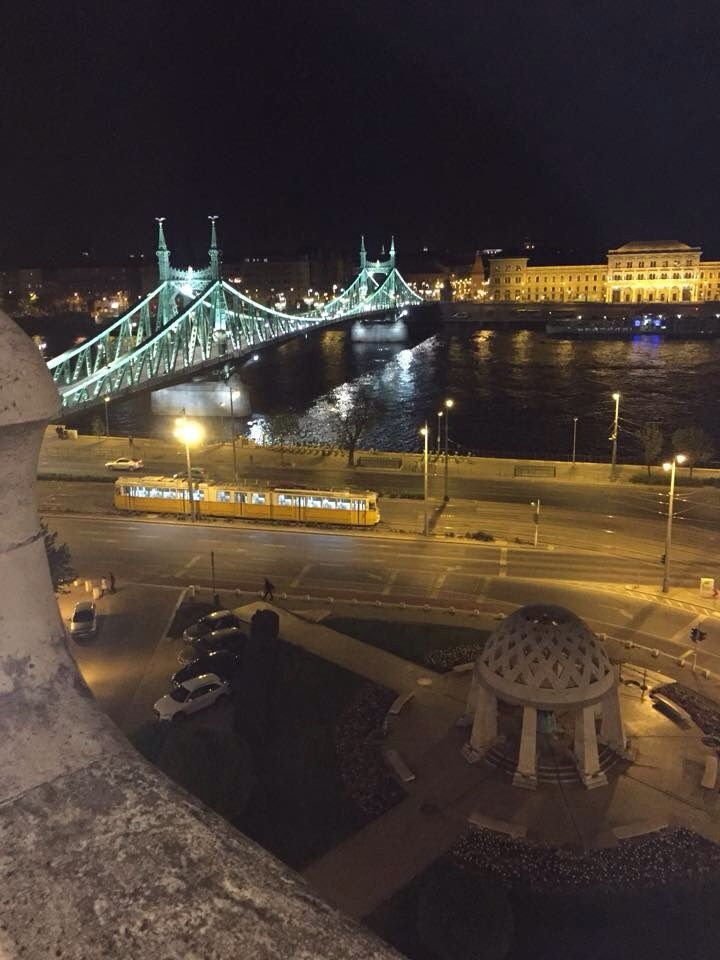
Freedom  Bridge from Hotel Gellert

Freedom Bridge from Hotel Gellert

We met this artist when we wandered into a gallery in Budapest and she told us her story of growing up and coming of age under Communism. This lovely, sweet woman smiled a lot and talked about peace and harmony, but her story was chilling. She explained that she didn’t even realize she was not free until she left and home county. Without bitterness, she told us of a generation of educated young people who were exiled from the country, or worse.

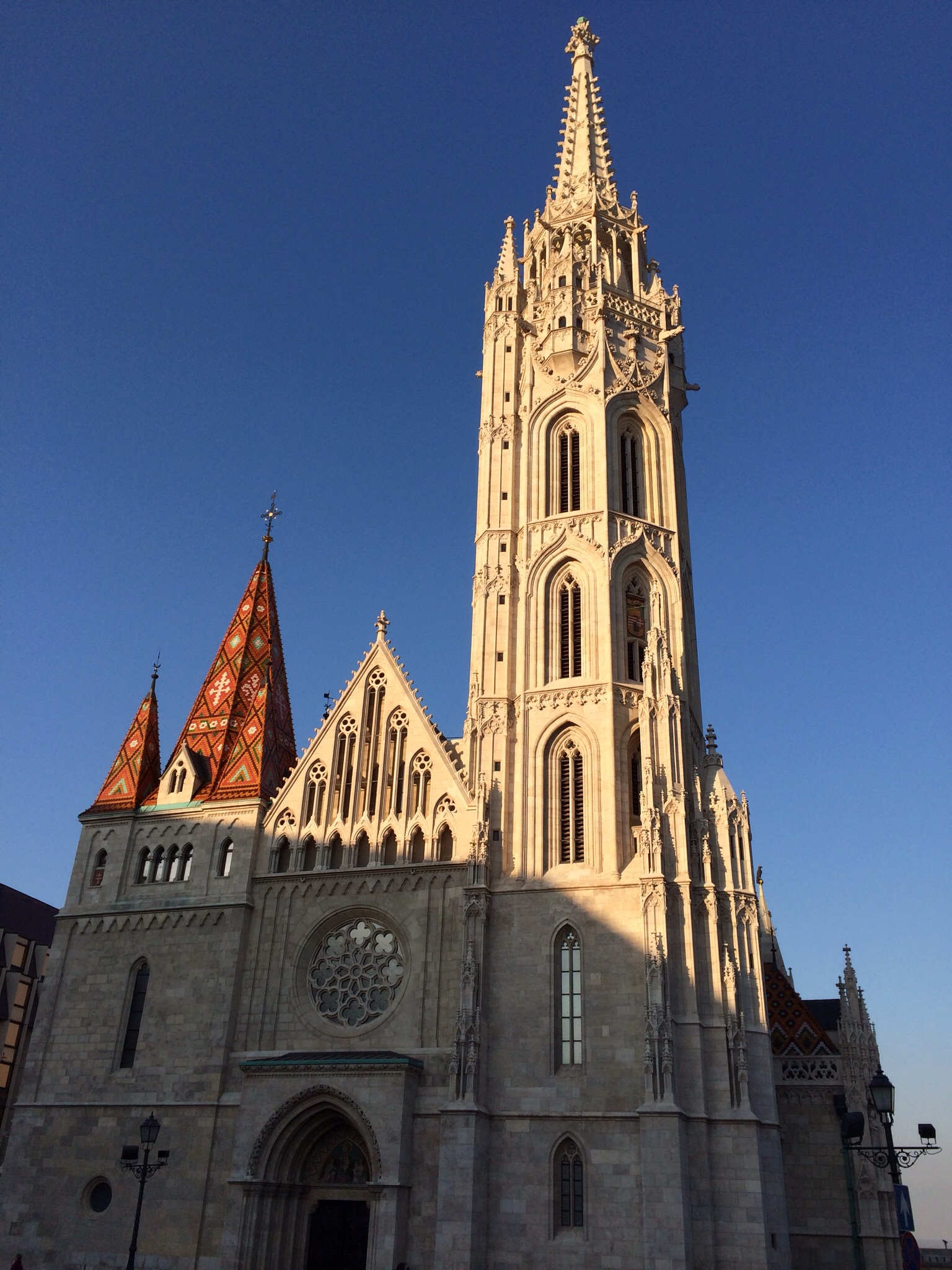
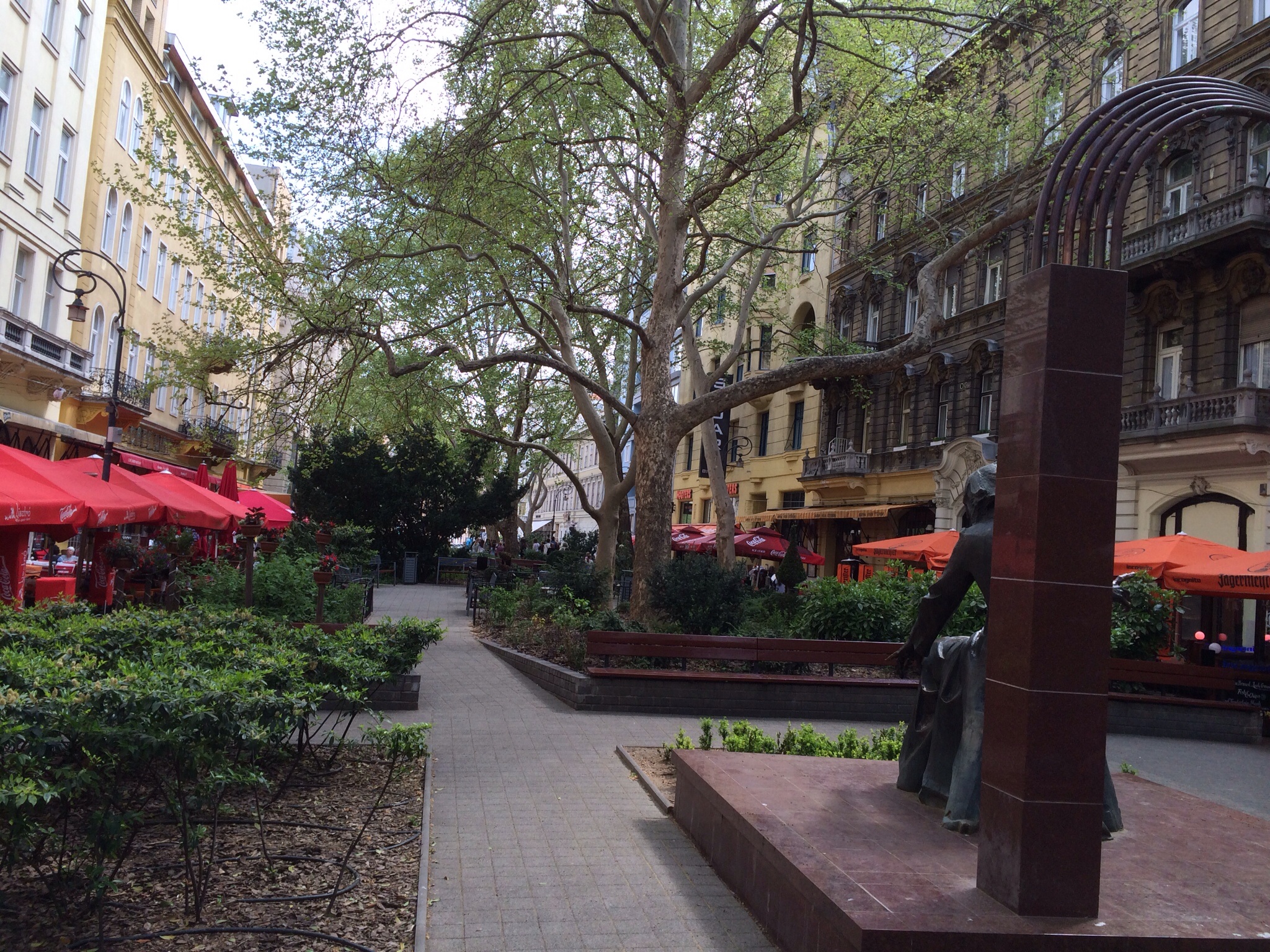
Budapest has a haunted beauty about it.  The buildings, bridges and grand boulevards tell a story of ancient grandeur, then neglect of an elegant past, then stark, no-frills utilitarianism, and now lavish capitalism with chic, global luxury chains lining the streets in affluent neighborhoods.

After visiting the Terror House, a museum commemorating the horrors of the Nazi and Communist eras, our hearts ached.  This part of the world has seen plenty of turmoil for centuries, and its people have suffered immensely!

imageWe gather from our conversation with this artist, and several other local citizens, and from what we can see around  us, that Hungary has not fully recovered from decades of oppression and neglect.   For some, the Velvet Revolution in 1989 brought wealth and opportunity; for others, jobs evaporated and life became harder – at least economically. The buildings here are breathtakingly beautiful, and as we read beforehand, Budapest is reminiscent of Paris, but still slightly tattered.

During our visit, the air was balmy, the trees were blooming in shades of pink, lavendar and white all over town, and the Danube was blue.  Springtime was in full bloom, and we hope that the beautiful weather is a metaphor for the state of the country in 2015.  May the long winter be drawing to a close in this country’s history.  We wish for it a long spring and prosperous summer!

image

Landing in Stockholm

Stockholm is our first stop on a 12-day trip in which our primary destination is Central Europe.  It might seem like an unconventional itinerary, but we were enticed by low fares for a new Oakland-Stockholm route offered by Norwegion Air

imageimage

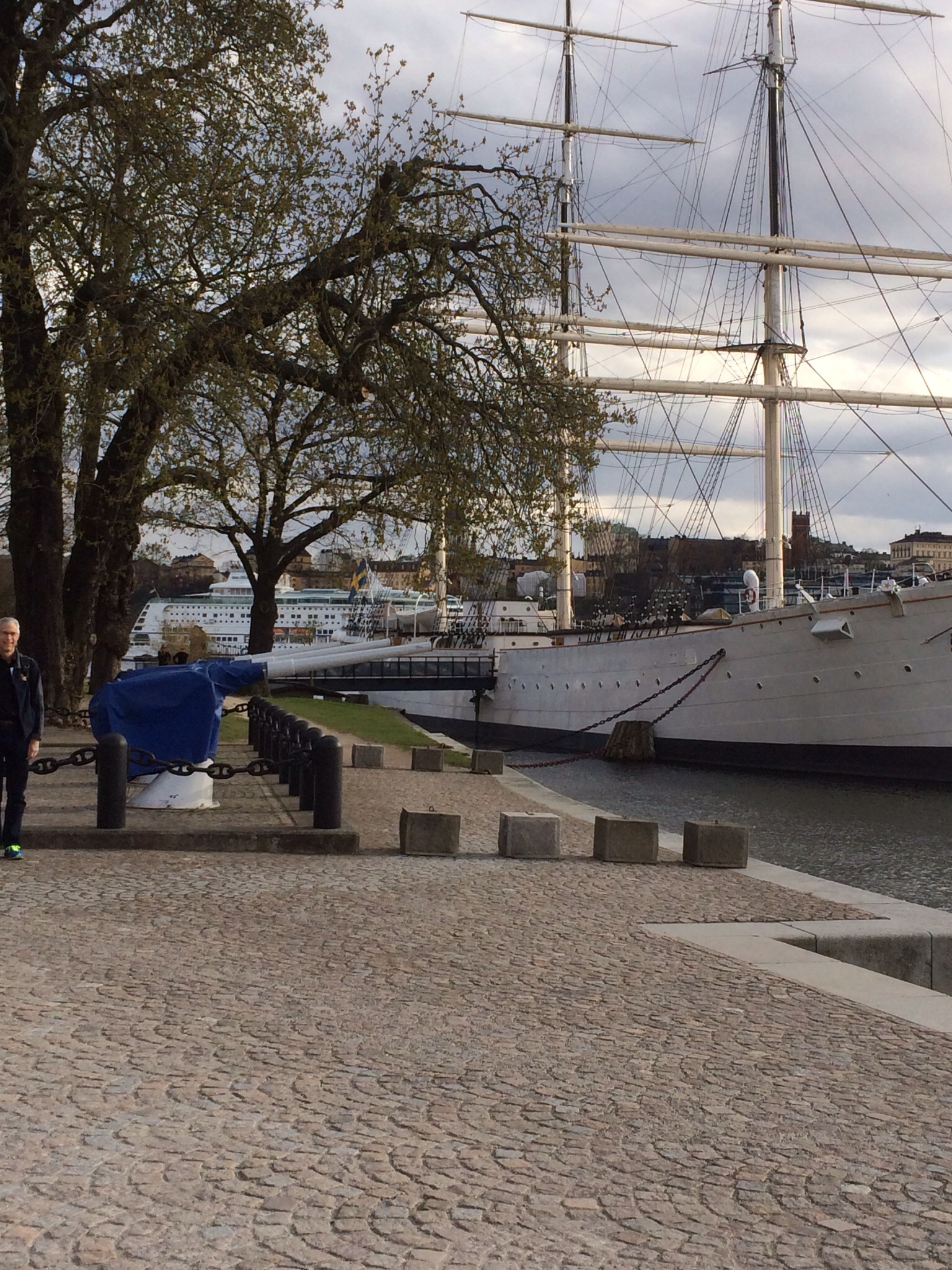
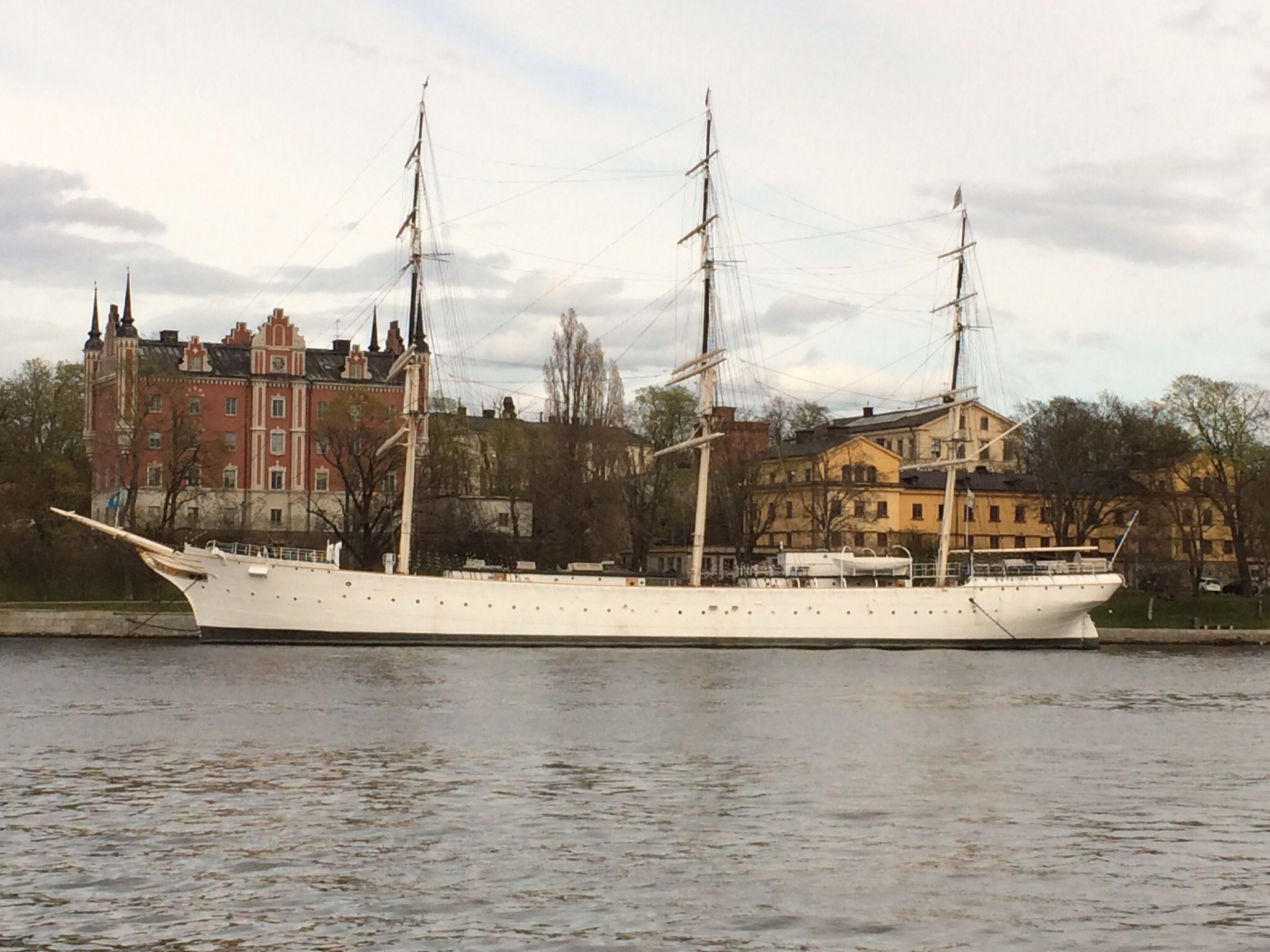
Our home for the next few days.  The af Chapman, a hostel on a tall ship!

image

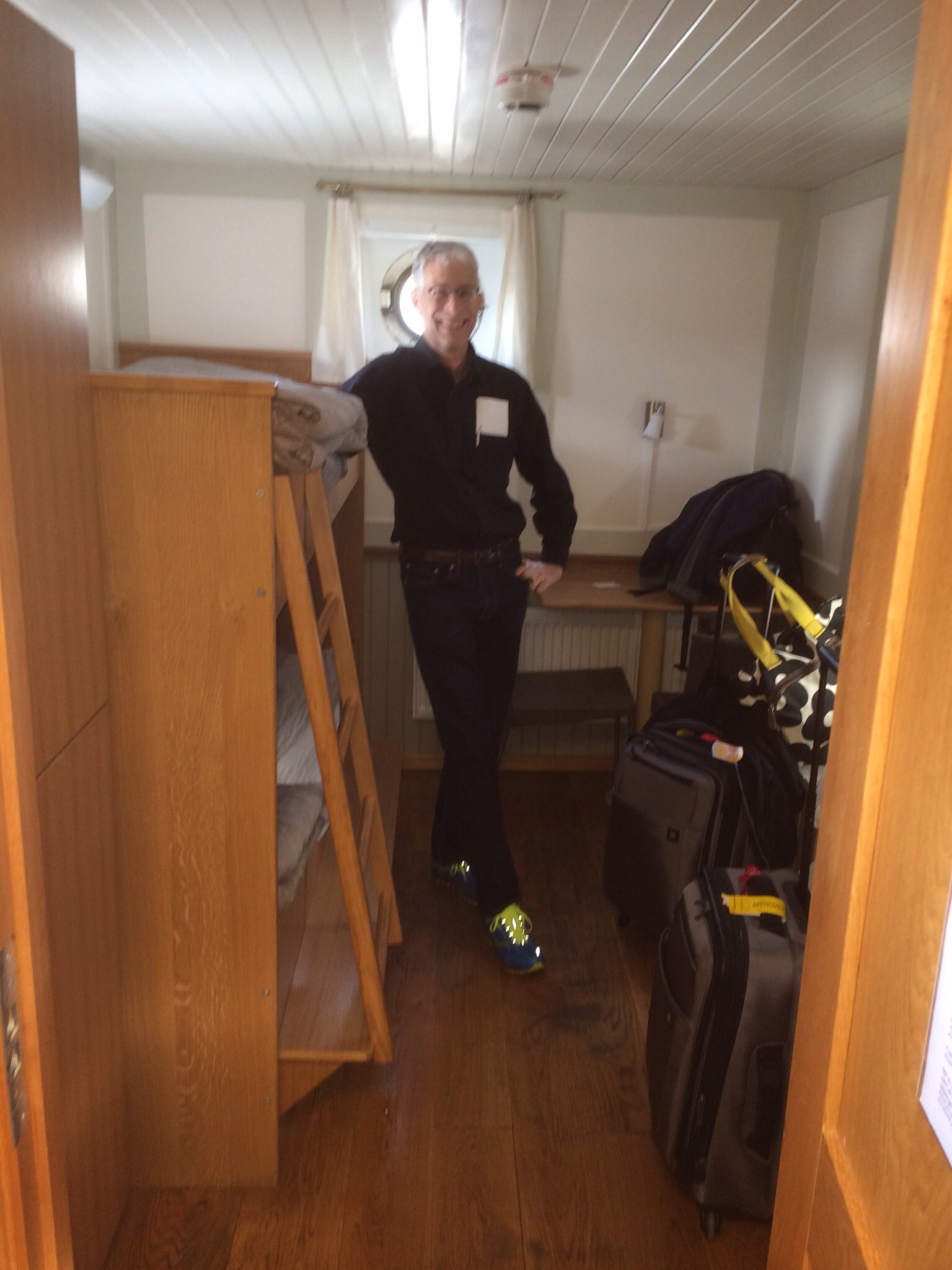
Compact but comfortable cabin, with a great view!

image

image
image

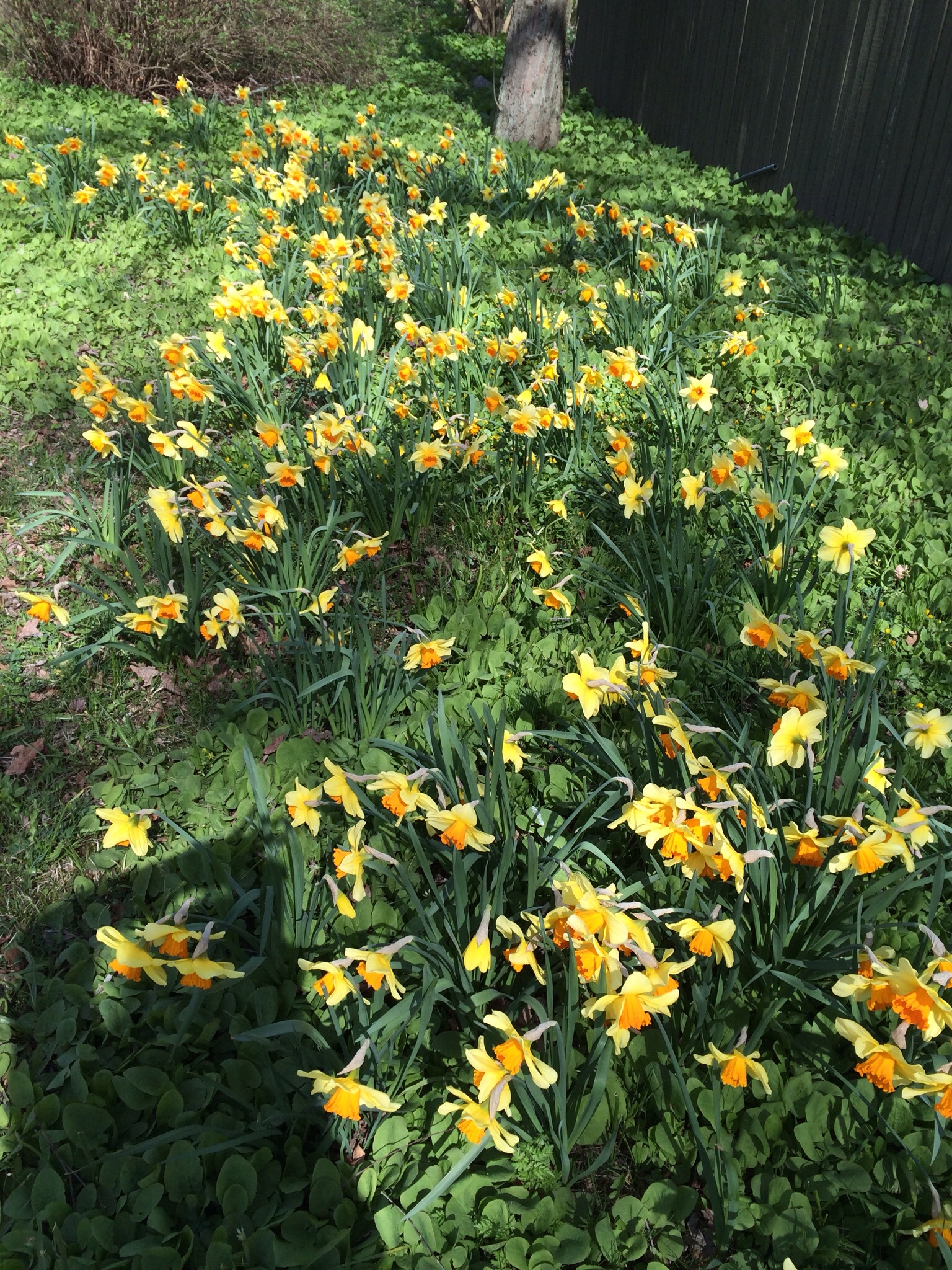
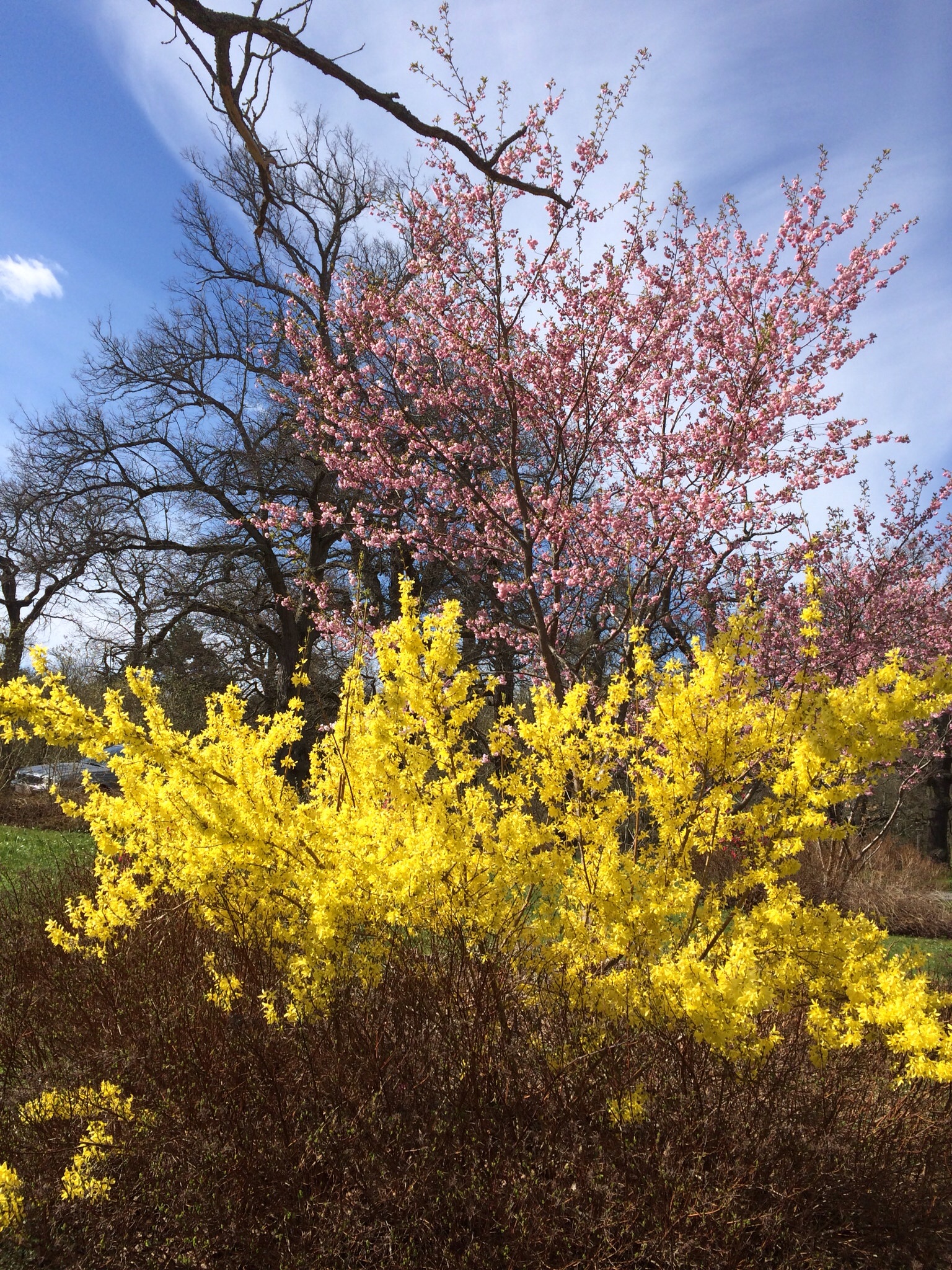
Spring is in full bloom, but the air is still chilly.

Our visit to Stockholm was short, but we made the most of our short time, beginning with an amazing dinner at Speceriet.  This restaurant is a “back-pocket” to a Michelin-rated restaurant next door.  We were not familiar with this concept, but apparently it is very common in Sweden to have a lower-cost, casual option next door to a high-end restaurant.  Recipes are tested, and guests can sample the talents of the chef.  The seating at Specieriet was limited and communal.  We ended having great conversations with the diners to our right and left — between us, we represented 4 countries!

The next day we visited the Vasa Museum and saw the famous ship that was commissioned by the king in the early 1600s and sank on its maiden voyage.  In 1961 it was finally excavated and over the course of many years reconstructed.  An amazing story and sight to see!

image

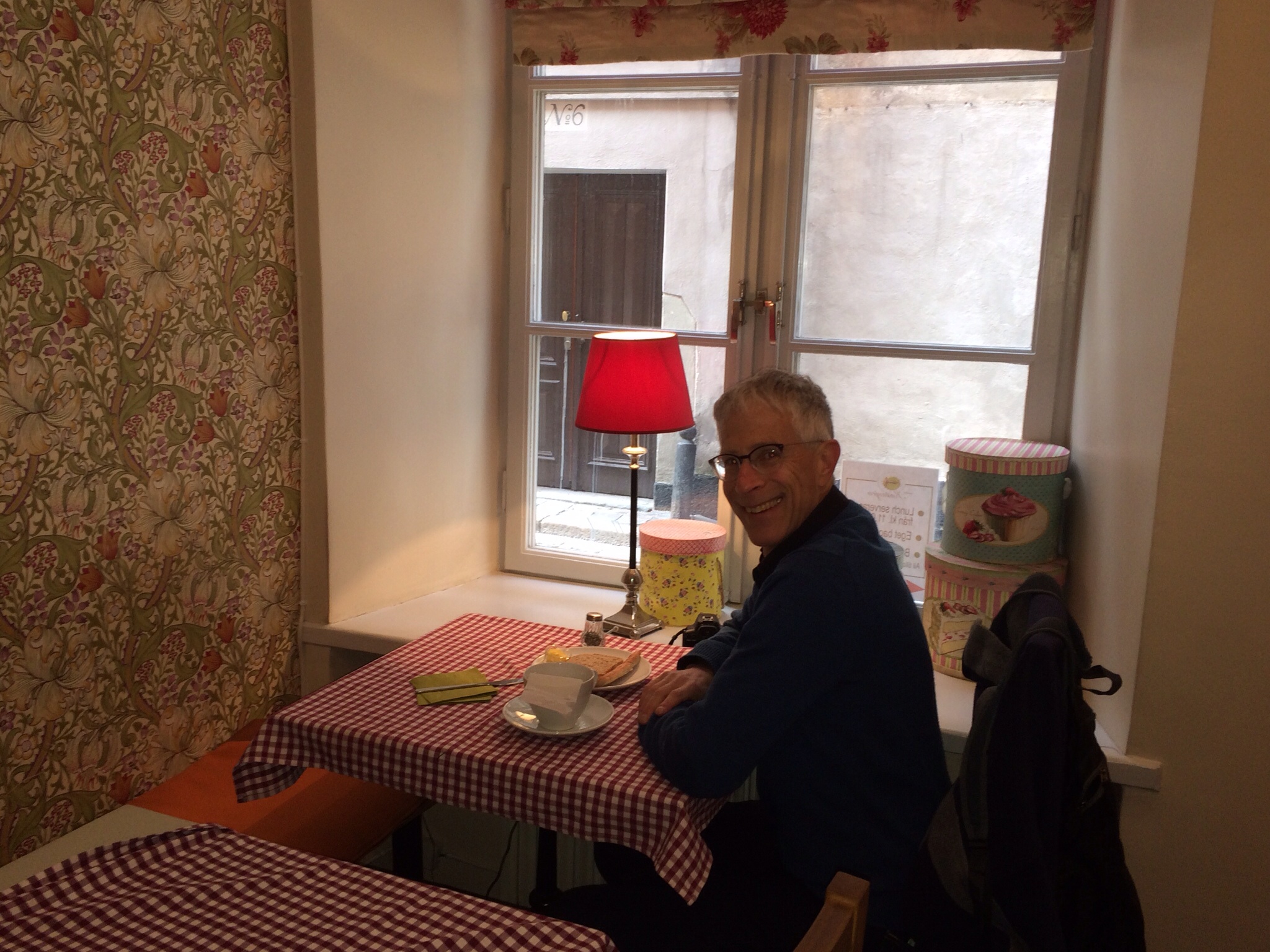
We finished the day with a long walk around Gamal Stan, otherwise referred to as Old Town.  Like many such places, parts of it were overrun with cheap tourist shops selling trinkets, but once we got off the main streets, we enjoyed wandering through residential areas, and even found a cosy spot for a cup of tea.  We love the lamps at each table, no doubt to accommodate the short days of winter, but welcome on a cool, spring day, too!

image

A few other random observations from our 2 days in Sweden:

–Loved seeing many dads walking babies in strollers, without mom along.  (You don’t really realize how much rarer this is in the US until you see it somewhere else — it was striking!)

–We understand why so many Swedes settled in Minnesota.  The countryside between the airport and the Stockholm is so reminiscent of the northern Midwest in the US!

–Nearly everyone speaks flawless English – it is clear that students here learn two languages from an early age.  Impressive!

Now, on to Hungary . . .